
The last time the southwest monsoon arrived earlier than in 2025 -- that is, back in 2009 -- the rains lost steam after the early onset and ended the season with almost 23 per cent deficient rainfall, which was the lowest recorded average rainfall in several decades over India.

According to the Central Water Commission, of the 91 major reservoirs in the country, 62 water bodies reported 80 per cent or below of normal storage.

Rajasthan (73 per cent), Himachal Pradesh (67) and Delhi (60) saw the highest share of districts reporting excess to large excess rainfall.

The India Meteorological Department (IMD) has predicted above-normal rainfall for most parts of India during the post-monsoon season (October to December), except for some areas in the northwest. The southwest monsoon season ended with the country recording eight per cent above normal rainfall.

The southwest monsoon has arrived in Mumbai 16 days before its usual date, making it the earliest arrival since 1950. This early onset follows the monsoon's arrival in Kerala, the southernmost state, on Saturday, marking the earliest arrival since 2009. The India Meteorological Department (IMD) predicts an above-normal rainfall for the 2025 monsoon season, with rainfall between 96 per cent and 104 per cent of the 50-year average of 87 cm considered 'normal'. The monsoon is crucial for India's economy, providing vital water for agriculture and replenishing reservoirs.
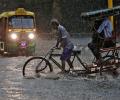
As the month ended with 33 per cent deficiency, which translates to around 67 per cent of the Long Period Average, several parts of the country have been witnessing drought-like situation.

The Lancet study revealed that the HbA1c test is erroneous in populations with anemia and other hemoglobin-related deficiencies in India.

Nearly 21 per cent of the country has received "deficient" rainfall till July 31, the India Meteorological Department on Monday said.

Although the monsoon is not active, it is not sluggish either he said, adding that the eastern coast, central India and north east are getting fairly good rains. Even Maharashtra and parts of peninsula are having rain.

Any long dry spell could cause moisture stress in the standing crop during the crucial maturing stage and also make it prone to pest and disease attacks.

After becoming active over the rice-growing Indo-Gangetic plains, the southwest monsoon might witness weak phase for the next 3-4 days over the already rain-deficient region. So far, the main deficit states are Uttar Pradesh (-42 per cent), Bihar (-36 per cent), Jharkhand (-48 per cent), and West Bengal (-24 per cent). According to private weather forecasting agency Skymet, rains in west UP, Punjab, Haryana, Bihar, and Jharkhand are expected to be weak in the next 3-4 days before again picking pace.

'Usually the average rainfall per day is around 8 mm and India is receiving 10 to 11 mm per day since the last one week.' 'July seems to be very good for the entire country.'

Monsoon will be insufficient this year.
The bulk of these districts are in Bihar, where 87 per cent districts are monsoon-deficient till July 9.

By now, monsoon should have reached the central India, including parts of Madhya Pradesh, Rajasthan, eastern Uttar Pradesh and Gujarat, but it is yet to reach Maharashtra.

July and August are expected to receive 107 per cent and 104 per cent of rainfall

The slow progress of the south-west monsoon has led to overall deficiency of rains by 22 per cent over the last fortnight, the meteorological department on Wednesday said.

The record monsoon rains across India during the June to September months was 937.2 millimetres, the 5th-highest since 2001 and 38th-highest since 1901.

'Uncertainty level A in the morning, uncertainty level B in the afternoon. If I answer about tariff rates now, I'll be outdated by the evening.'

The country can expect normal rainfall during the southwest monsoon season as a positive Indian Ocean Dipole (IOD) and a lower snow cover over the northern hemisphere are likely to counter the evolving El Nino conditions, the India meteorological department (IMD) said on Tuesday.

Last year, Ashok Das, a farmer-cum-fisherman from the small industrial town of Rishra in the Hooghly district of West Bengal, had promised his younger son a branded television.
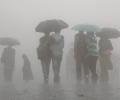
A number of significant linkages between rainfall and economic outcomes have policy implications.

The southwest monsoon has picked up pace, and is now on the verge of covering almost the entire country.

Farmers of Haryana suffered because of unseasonal rain.

India has received 20 per cent less rainfall since the start of the monsoon period on June 1, with the rain-bearing system making no significant progress between June 12 and 18, according to the India Meteorological Department (IMD).
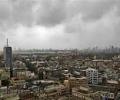
Deficient monsoon is likely to pull down the economic growth in the current fiscal to about six per cent, from 6.5 per cent a year ago, the Planning Commission said on Friday.

The southwest monsoon season concluded on Saturday with India receiving 'below-average' cumulative rainfall -- 820 mm compared to the long-period average of 868.6 mm -- in an El Nino year.

There should be one comprehensive and credible report on weather for India since a major part of the economy is dependent on it, says 'weather man' Angshujyoti Das.

The India Meteorological Department (IMD) has predicted above-normal rainfall for the upcoming monsoon season in India (June to September). The cumulative rainfall is estimated to be 105 percent of the long-period average. The IMD has also ruled out the possibility of El Nino conditions during the entire season. The monsoon is crucial for India's agriculture sector, which supports the livelihood of a significant portion of the population and contributes substantially to the country's GDP. However, while the prediction of normal rainfall brings relief, climate change is expected to cause variations in rainfall distribution.
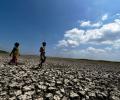
The onset of the southwest monsoon is being keenly watched this year as it may provide an early sign regarding its progress over the Indian subcontinent, particularly when El Nio is expected to rear its head during the latter half of the season.
The IMD chief also allayed fears of occurrence of an El-Nino.
While weather forecasters remain divided on how the monsoons will play out in India over the next few months, analysts believe the news at the current juncture - at best - can trigger a knee-jerk reaction in the markets. They believe it is too early to say whether the sub-par monsoon on account of El Nino can seriously dent the market sentiment in the short-to-medium term. "These are just initial forecasts and we will have another round / status update from the weather forecasters a month down the line.
'All El Ninos are not associated with the deficient monsoon.'
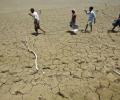
Rain deficiency in eastern and western Uttar Pradesh, Bihar, Jharkhand, Gangetic West Bengal, Assam and Meghalaya is 20-46 per cent less than normal as of June 17.

ADB too had projected Indian's economic growth for current fiscal at 7.6 per cent
Close to half the country is experiencing deficient rains and the shortage for the figure has gone up to 16 per cent.

'Even if India is attractive, FPIs currently lack the funds to invest, as money is being redirected to the US.'

Addressing a press conference virtually, India Meteorological Department Director General Mrutyunjay Mohapatra said September was likely to witness normal rainfall in the range of 91-109 per cent of the long period average of 167.9 mm.

Scientists had earlier said the cyclone pulled the moisture and convection, impacting the intensity of the monsoon and delaying its onset over Kerala.

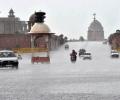
While it hit the national capital two days before schedule, its entry into the financial capital is two weeks late, the Met office said.
